



- Published on
- 10 min read
Employee communication is how people in a company share ideas, updates, and feedback every day. It may sound simple, but it plays a very big role in how a business works and grows. When communication is clear, teams understand their goals, work better together, and feel more connected.
Recent studies show how important this really is. According to Gallup, companies with strong communication see up to 21% higher productivity. Research from McKinsey shows that better communication tools can improve productivity by 20–25%. At the same time, a report by Grammarly found that poor communication costs businesses billions every year due to errors and lost time.
Today, work is not limited to one office. Many teams are remote or hybrid. People work from different cities and time zones. Because of this, communication must be simple, clear, and well planned. Without it, teams can feel lost, disconnected, or confused.
Good employee communication helps people feel valued. It builds trust between employees and leaders. It also reduces stress because everyone knows what to do and why it matters.
In this guide, you will learn everything about employee communication. We will cover what it means, the different types, common problems, and how to improve it step by step.
Defining employee communication
Employee communication is the process of sharing information inside a company. It includes messages between leaders and employees, between teams, and across departments. It can happen through emails, chats, meetings, or even casual conversations.
Why employee communication matters in modern workplaces
In modern workplaces, communication is the glue that holds everything together. When employees clearly understand their roles, they can work faster and make fewer mistakes. It also helps them feel confident in their work.
Strong communication also builds trust. When leaders share updates openly, employees feel included. This creates a positive work environment where people are more willing to contribute ideas and feedback.
Employee communication vs. internal communication — what's the difference?
Employee communication focuses on how people connect, share ideas, and stay engaged. It is more about the human side of communication.
Internal communication is a broader term. It includes systems, tools, and company-wide messaging. In simple words, internal communication is the structure, while employee communication is the experience people have within that structure.
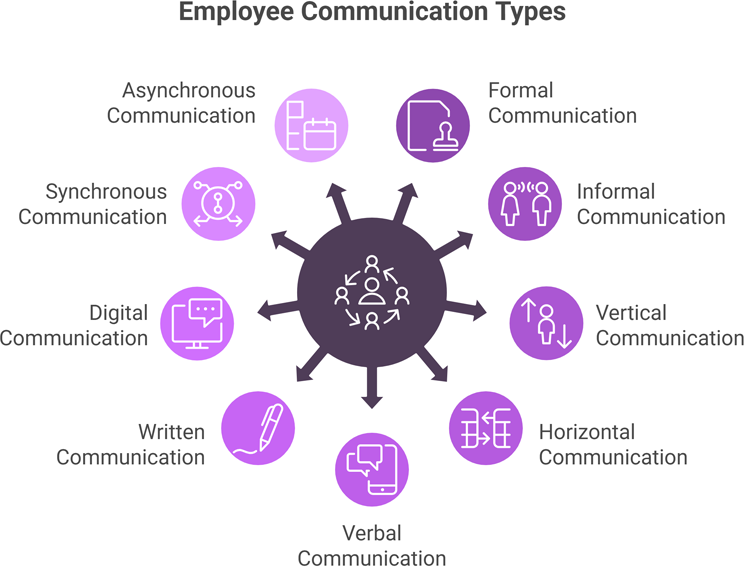
Types of employee communication
Employee communication happens in many ways in daily work. People talk, send messages, share updates, and give feedback. Some communication is planned, while some happens quickly during the day.
All these ways help employees stay informed and connected. When people communicate often, work becomes smoother and easier to manage.
Formal vs. informal communication
- Formal communication includes official messages like company emails, reports, and meetings. These are planned and structured.
- Informal communication happens naturally. It includes quick chats, friendly conversations, or casual messages. Even though it is informal, it helps build relationships and trust.
Vertical communication (top-down & bottom-up)
- Vertical communication flows between different levels in a company. Top-down communication is when leaders share instructions or updates. Bottom-up communication is when employees share feedback or ideas.
- Both are important. Without top-down communication, employees feel lost. Without bottom-up communication, leaders miss valuable insights.
Horizontal & lateral communication
- This type of communication happens between people at the same level, like team members or departments. It helps teams coordinate work and solve problems together.
Verbal, written, and digital communication
- Verbal communication includes meetings and phone calls. Written communication includes emails and documents. Digital communication includes chat tools and collaboration platforms.
- Each type has its place. Good teams know when to use each one.
Synchronous vs. asynchronous communication
- Synchronous communication happens in real time, like meetings or calls. Asynchronous communication happens over time, like emails or messages.
- Asynchronous communication is very useful for remote teams because people can respond when they are available.
The role of employee communication in organizational success
Employee communication plays a big role in how well a company works. When people share clear updates, tasks get done faster. It also helps avoid confusion and mistakes.
Good communication keeps everyone on the same page. It helps teams work better together and reach their goals more easily.
Impact on employee engagement and morale
- When employees receive clear updates and feel heard, they become more engaged. They care more about their work and feel proud to be part of the team.
How communication affects productivity and performance
- Clear instructions help employee’s complete tasks faster. They spend less time guessing and more time doing meaningful work.
Link between communication and employee retention
- Employees are more likely to stay in a company where communication is open and honest. They feel respected and valued.
Communication and company culture — the connection
- Communication shapes company culture. A transparent and open style creates a positive culture, while poor communication creates confusion and frustration.
Common barriers to effective employee communication
Even good teams can face communication problems. Sometimes messages are not clear, or people do not get the right information at the right time.
Too many messages can also be a problem. It can make it hard to focus on what is important. These issues can slow down work and create confusion.
Physical and geographical barriers
- Remote and hybrid work can create gaps. Without face-to-face interaction, messages can be misunderstood.
Language and cultural barriers
- Different languages and cultural backgrounds can lead to confusion if not handled carefully.
Organizational silos and hierarchy issues
- Sometimes teams do not share information across departments. This creates delays and confusion.
Information overload and communication fatigue
- Too many messages can overwhelm employees. They may miss important information or feel stressed.
How to build an effective employee communication strategy
Clear communication does not happen by chance. It needs a simple plan that helps everyone share and receive information in the right way. Without a plan, messages can get lost or misunderstood.
A good strategy helps teams stay organized and consistent. It makes sure everyone knows what to share, when to share it, and how to keep communication clear every day.
Step 1: Audit your current communication
- Start by reviewing how communication works today. Identify what is working and what is not.
Step 2: Define your communication goals and audience
- Set clear goals. Know who needs the information and why.
Step 3: Choose the right communication channels
- Use the right tools for each type of message. For example, quick updates can go through chat, while detailed information can go through email.
Step 4: Create a communication calendar and cadence
- Plan when and how often communication should happen. This keeps everyone informed without overload.
Step 5: Measure effectiveness and improve
- Track results and collect feedback. Use this data to improve your approach over time.
Best practices for employee communication in 2026
Employee communication keeps changing as the way we work changes. Teams now work from different places and use many tools every day. This makes it important to keep communication simple and clear.
By following a few easy practices listed below, teams can stay connected and avoid confusion. These small steps can help people share information better and work more smoothly.
- Prioritize Two-Way Communication
Communication should not be one-sided. Employees should feel free to share their thoughts. This builds trust and improves teamwork. - Personalize Messages
Different teams need different information. Tailor messages based on roles and needs. This makes communication more useful. - Use Storytelling
Stories make messages easier to understand. They help employees remember information better. Simple examples can make a big difference. - Leverage Visuals and Video
Visual content makes communication clearer and more engaging. Videos, charts, and images help explain ideas quickly. - Foster Psychological Safety
Create a safe space where employees can speak openly. They should not fear judgment or criticism. This leads to honest and better communication.
Employee Communication Tools and Platforms
There are many tools that help teams communicate better. These tools make it easier to share updates, send messages, and stay connected across teams.
- Intranet and Employee Portals
These tools are used to share company-wide updates and important resources. Employees can find policies, news, and documents in one place. This keeps everyone informed. - Messaging Apps
Tools like Clariti, Slack and Microsoft Teams help with quick communication. Employees can send messages, share files, and create group chats. This makes daily communication fast and simple. - Email Newsletters
Emails are useful for sharing important updates and announcements. Companies often use them to send news, changes, and reminders. They are easy to access and widely used. - Town Halls and Meetings
These help leaders connect with employees directly. Teams can ask questions and get updates in real time. This builds trust and keeps everyone aligned. - Employee Apps
Mobile apps allow employees to stay connected from anywhere. This is useful for remote teams or employees who are always on the move. It helps them stay updated at all times.
Employee communication for remote and hybrid teams
Remote and hybrid work are now very common. Many people work from home, while others work in the office. This means teams are not always in the same place.
Because of this, communication has become very important. Teams need simple ways to share updates and stay connected. Clear communication helps everyone understand their work.
When communication is strong, remote and hybrid teams can work smoothly and feel more connected.
- Challenges Unique to Remote Communication
Remote teams may feel disconnected because they do not meet in person. This can lead to less engagement and weaker team bonds. Misunderstandings can also happen more often. - Keeping Remote Employees Informed and Included
Regular updates and check-ins help remote employees feel included. Managers should share updates often and ask for feedback. This helps employees stay connected to the team. - Asynchronous Communication Best Practices
Not all work happens at the same time. Clear messages, shared documents, and structured tools help teams stay aligned. This allows people to work at their own pace without confusion.
Measuring the success of your employee communication
It is important to know if your communication is working well. Good communication helps teams stay clear and do their work better. But you need simple ways to check if it is effective.
By looking at results and feedback, you can see what works and what does not. This helps you make small changes and improve over time.
- Key Metrics
Track open rates, engagement levels, and feedback scores. These numbers show how well your communication is working. They help you see what employees read and respond to. - Conducting Employee Communication Surveys
Ask employees what is working and what needs improvement. Surveys give honest feedback. This helps you understand real issues. - Using Data to Refine Your Approach
Use the data you collect to improve your communication. Make small changes and test what works better. Over time, this leads to stronger communication.
6 Simple Tips to Improve Employee Communication
Good communication helps people work better together. It makes tasks clear and reduces confusion. But many teams still face small issues in daily communication.
The good news is that simple steps can make a big difference. With a few easy changes, teams can share ideas more clearly and work more smoothly.
1. Set Clear Goals and Expectations
- Say exactly what you need. Keep it short and simple.
- For example: “Send your top 3 ideas by 5 PM.”
- This avoids confusion and saves time.
2. Encourage Open Feedback
- Communication should go both ways.
- Ask your team what they think and listen to them.
- Create a safe space where everyone feels okay to speak.
3. Use the Right Tools
Use tools that keep chats, emails, and tasks in one place. This helps your team stay organized and not miss anything. Additionally, using tools that create high-quality text with AI humanizer, such as Paraphrasing using AI, can help make your messages sound more natural and clear, improving how your team communicates overall.
4. Practice Active Listening
- Listen carefully when someone speaks.
- Do not interrupt.
- Ask simple questions to understand better.
5. Keep Things Simple and Clear
- Avoid long and complex messages.
- Short and clear messages work best.
- This helps everyone understand faster.
6. Be Open and Honest
- Share updates with your teammates.
- Talk about problems and plans clearly.
- When you are open, your team trusts you more.
How Clariti Can Help in Employee Communication
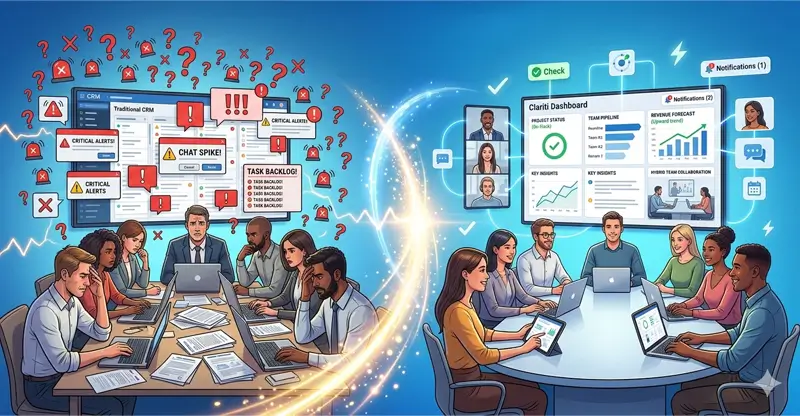
Work communication can feel scattered at times. Messages, emails, and files may be spread across different places. This can make it hard to stay organized and keep track of conversations.
Having everything in one place makes communication much easier. It helps teams stay clear, find information quickly, and work better together.
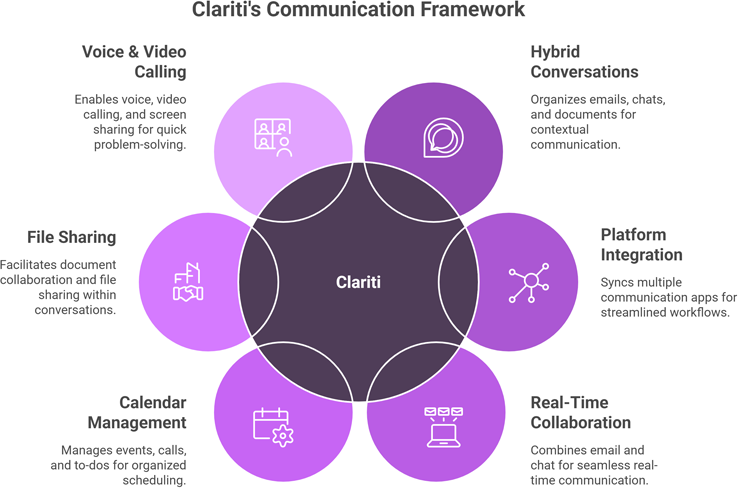
1. AI-Powered Hybrid Conversations for Contextual Communication
Clariti’s hybrid Conversations organize all your emails, chats, and documents in one place. Everything’s connected, and you never have to search for that one email again. It’s context-based and AI-powered.
2. Integration Across Multiple Communication Platforms
Got too many tools? Clariti syncs everything using Zapier. Connect your favorite apps—HubSpot, Google Drive, Trello—and streamline your workflow. No more switching between apps. If your workflow involves AI-generated content across tools, you can also Humanize AI to make written communication feel more natural and team-friendly—especially when clarity and tone matter.
3. Streamlined Email and Chat for Real-Time Collaboration
Clariti combines email and chat into one seamless experience. You get real-time chats and all your important emails in one spot—no more toggling between tools.
4. Calendar Events Management for Clear Communication
With Clariti’s calendar events, calls and to-dos, you’ll never miss a deadline. It keeps everything organized, with reminders and a clear view of your day.
5. File Sharing and Document Collaboration for Efficient Workflows
Collaborate on documents and share files —all within the conversation. Forget the endless email chains—just upload and move on.
6. Voice, video Calling & Screen Sharing for Seamless Collaboration
Need to talk it out? Clariti’s voice, video calling and screen sharing features make collaboration even easier. Quickly solve issues without lengthy emails or meetings.
Conclusion
Employee communication is not just about sending messages. It is about building understanding, trust, and strong relationships within a company. When communication is clear and simple, employees feel confident in their work and connected to their team.
In today’s fast and flexible work environment, communication matters more than ever. Teams are spread across locations, and work happens at different times. This makes it important to use the right tools and methods to stay connected.
Good communication improves productivity, reduces confusion, and creates a better workplace experience. It helps employees stay engaged and motivated. It also supports better teamwork and faster decision-making.
The best approach is to keep communication simple, clear, and consistent. Focus on listening as much as speaking. Use the right mix of tools, avoid overload, and always improve based on feedback.
When done right, employee communication becomes a strong foundation for growth. It helps companies build better teams, stronger cultures, and long-term success.
Frequently Asked Questions
What is employee communication?
Employee communication is how people in a company share information, ideas, and updates. It helps teams stay connected and work better together.
What are the main types of employee communication?
- Formal and informal communication.
- Top-down and bottom-up communication.
- Team-to-team (horizontal) communication.
- Verbal, written, and digital communication.
Why is employee communication important?
Good communication helps employees understand their work. It builds trust, improves teamwork, and increases productivity.
What is the difference between employee communication and internal communication?
Employee communication focuses on people and engagement. Internal communication is broader and includes systems, tools, and company-wide messaging.
What are the best channels for employee communication?
- Email for updates.
- Chat tools for quick messages.
- Meetings for discussions.
- Intranet for company news.
How do you improve employee communication in a remote team?
Use clear messages and simple tools. Schedule regular check-ins. Make sure everyone feels included and informed.
How do you measure the effectiveness of employee communication?
- Check email open rates.
- Track engagement levels.
- Use employee surveys.
What are the common barriers to employee communication?
- Poor internet or remote gaps.
- Language differences.
- Too many messages.
- Lack of clear structure.
What is a two-way communication strategy at work?
It means both leaders and employees share ideas. People can give feedback and feel heard, not just receive instructions.
What should an employee communication plan include?
- Clear goals.
- Target audience.
- Right channels.
- Schedule for messages.
- Ways to measure success.


Start for FREE with Personal CRM
We too hate spam! Your email is secure with us.

Spot secured. You're in.
You’re officially on the list for early access to Clariti.


No more switching tools.

No more lost context.

Just Clarity.
You’ll be among the first to experience it when we launch. We’ll let you know the moment it’s ready.

Keep an eye out for emails from @clariti.app.
(and check your spam folder just in case—whitelisting us helps ensure you don’t miss a thing).