



- Published on
- 10 min read
Chat is one of the most common ways people talks today. We use chat every day, and so do billions of others. From quick texts to AI chat tools, chat has changed how we connect.
Today, more than 3 billion people use messaging apps worldwide Statista. Many of these apps offer online chat and live chat features. This shows how important chat has become. Another report from HubSpot says that over 79% of customers prefer live chat because it gives fast answers.
Chat is fast, simple, and easy to use. You can send a message and get a reply in seconds. You can chat with friends, teams, or even AI chat systems. Businesses also use chat to talk to customers in real time.
This guide will explain what chat means, how it works, and why it matters. We will also cover online chat tools, live chat systems, and AI chat trends. By the end, you will have a clear idea of how chat shapes modern communication.
What Does "Chat" Mean?
Chat means talking with someone using digital tools. This can be text, voice, or even video.
In simple terms, chat is a quick and easy way to send messages online. It can happen in real time or with a delay.
Chat vs. messaging: key differences
- Chat and messaging may seem the same, but they are slightly different.
- Chat usually means real-time conversation. You send a message and get a reply fast. Live chat on websites is a good example.
- Messaging can be slower. You send a message, and the other person may reply later. SMS and email fall into this group.
Real-time vs. asynchronous chat
- Real-time chat happens instantly. Both people are active at the same time. Live chat and online chat tools work this way.
- Asynchronous chat does not need both users at the same time. Messages wait until the other person reads them. This is common in apps like email or offline messaging.
A Brief History of Chat Technology
Chat has come a long way over the years.
From IRC to instant messaging
- In the early days, chat started with IRC (Internet Relay Chat) in the 1980s. It allowed users to join chat rooms and talk in real time.
- Later, instant messaging apps like AOL Instant Messenger and MSN Messenger became popular. These tools made online chat easy for everyone.
How AI chat changed the landscape
- AI chat has changed everything. Today, AI chat tools can answer questions, help with tasks, and even hold conversations.
- AI chatbots are used in customer service, education, and business. They save time and improve user experience.
Types of Chat Platforms and Tools
There are many types of chat tools today. Each serves a different need.
Personal chat apps (WhatsApp, iMessage, Telegram)
- These apps are used for daily communication. They support text, voice, and video chat.
- WhatsApp alone has over 2 billion users. These apps make online chat simple and fast.
Business and team chat tools
- Tools like Clariti, Slack and Microsoft Teams help teams work together. They support group chat, file sharing, and video calls.
- These tools improve teamwork and reduce email use.
AI chatbots and virtual assistants
- AI chat tools like ChatGPT or virtual assistants can answer questions and help users.
- They use smart systems to understand and respond like humans.
- Beyond professional tools, there are also platforms designed for personal use — if you’ve ever wondered what is nsfw ai chatbot and how it differs from standard AI chat, it’s a growing category worth understanding before choosing the right tool for your needs.
Live chat for websites and customer support
- Many websites use live chat to help customers. This allows users to ask questions and get quick answers.
- Live chat improves customer satisfaction and boosts sales.
How Chat Works: Technology Behind It
Chat may seem simple, but it uses complex systems.
Protocols and real-time data delivery
- Chat systems use special rules called protocols. These help messages travel quickly between users.
- Technologies like WebSockets allow real-time chat. This means messages appear instantly.
End-to-end encryption in chat
- Many chat apps use encryption. This keeps messages private.
- End-to-end encryption means only the sender and receiver can read the messages. Even the app cannot see them.
Benefits of Using Chat for Communication
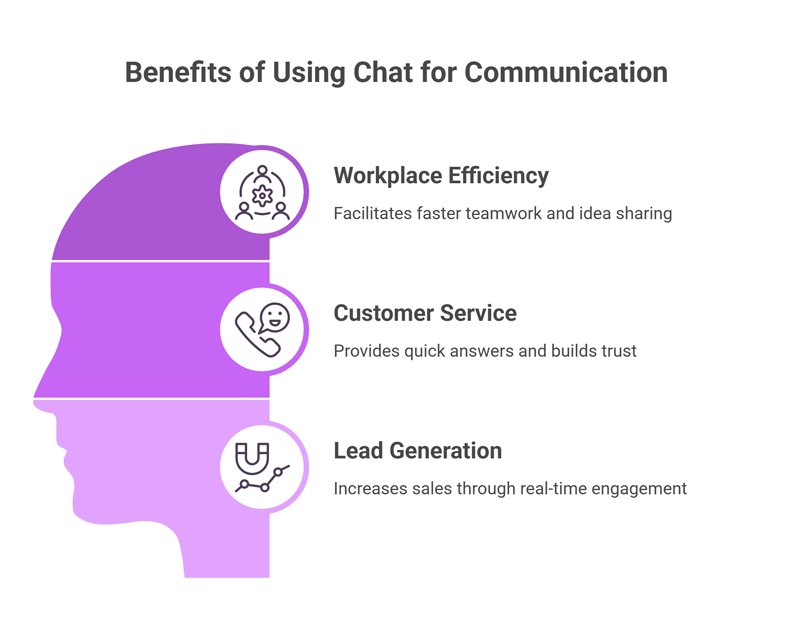
- Chat offers many benefits in daily life and business.
Chat in the workplace
- Chat helps teams work faster. It reduces the need for long emails.
- Teams can share ideas, files, and updates in real time.
Chat for customer service and lead generation
- Businesses use live chat to talk to customers. It helps answer questions quickly.
- This improves trust and increases sales. Many users prefer chat over phone calls.
AI Chat and the Future of Conversation
- AI chat is shaping the future of communication.
Large language models and conversational AI
- AI chat tools use large language models. These systems understand and generate human-like text.
- They can answer questions, write content, and assist users.
Multimodal chat: text, voice, and images
- Modern chat tools support more than text. Users can send voice notes, images, and videos.
- AI chat systems can also understand these formats. This makes communication richer.
What is the difference between chat and email?
- Chat is fast and short. Email is slower and more formal.
- Chat works best for quick talks. Email is better for detailed messages.
- Chat happens in real time. Email can take hours or days.
How can I improve my chat etiquette?
- Good chat etiquette makes communication clear and polite.
- Keep messages short and clear. Avoid sending too many messages at once. Use simple words.
- Respond on time, but do not rush. Be respectful and kind.
How Clariti Combines Chat and Email in Hybrid Conversations to Address Modern Online Communication
- Modern communication often feels messy. Teams switch between chat apps and email all day. This creates confusion, missed details, and long message threads. Clariti solves this problem by combining chat and email into one smart system.
- Clariti’s core idea is simple. It brings chat and email together into “hybrid conversations.” This means all related messages stay in one place. Instead of jumping between tools, users can see everything in a single view.
- Clariti allows you to embed emails directly into chat messages. This gives full context to every discussion. For example, if a team is talking about a client request, they can attach the original email inside the chat. This removes the need to search inboxes or forward long threads.
- Clariti also helps reduce clutter. Traditional email often leads to long, confusing chains. With Clariti, these are replaced by clean, organized conversations. Messages are grouped by topic, not by time. This makes it much easier to follow discussions.
- Another key feature is structure. Normal chat tools can feel random and unorganized. Clariti changes this by giving chat the structured feel of email. Conversations stay focused, and users can quickly understand what is happening.
- Clariti AI adds even more value. It can find related chats and emails and connect them automatically. This creates a complete picture of a discussion. I find this especially useful for team projects, where context is often lost.
- The result is faster and clearer communication. Teams no longer deal with scattered messages or missing details. Everything is linked, organized, and easy to access.
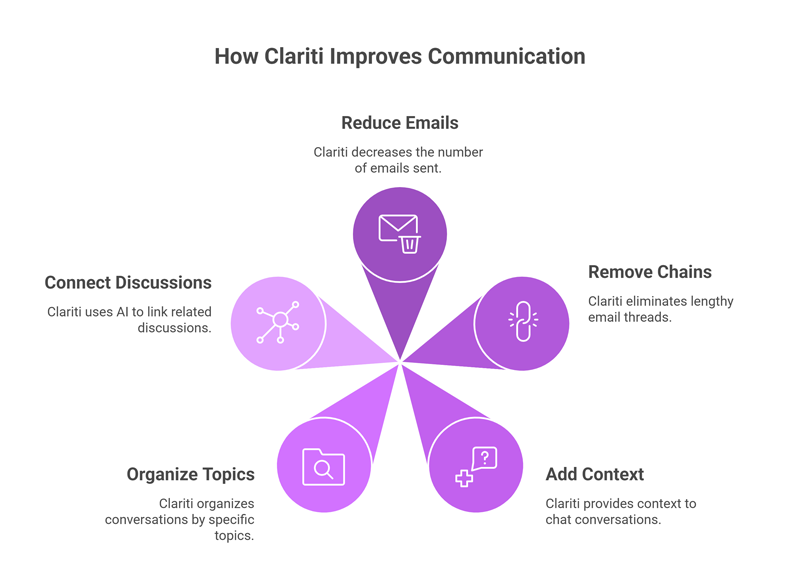
In short, Clariti improves online communication by:
- Reducing unnecessary emails.
- Removing long email chains.
- Adding context to chat.
- Organizing conversations by topic.
- Using AI to connect related discussions.
This hybrid approach fits the needs of modern work. It combines the speed of chat with the clarity of email. The result is a system that keeps teams aligned, productive, and focused.
Conclusion
Chat has become a key part of modern life. It is used everywhere, from personal messages to business tools. It is fast, easy, and flexible.
Online chat and live chat have changed how people talk. They allow instant communication across the world. This makes work faster and relationships stronger.
AI chat is taking things even further. It helps users get answers quickly and improves customer service. Businesses now rely on AI chat to stay competitive.
At the same time, tools like Clariti show that chat is still evolving. By combining chat with email, they solve real problems in communication.
The future of chat looks exciting. With new tools and smarter AI, communication will become even easier. Chat will continue to grow as a key part of digital life.
In the end, chat is more than just messages. It is a powerful way to connect, share, and work together in real time.
Frequently Asked Questions
What is chat and how does it work?
Chat is a way to send and receive messages over the internet in real time. It works using internet protocols that deliver messages instantly between users through apps or websites.
What is the difference between chat and messaging?
- Chat: Real-time, fast responses, active conversation.
- Messaging: Can be delayed, not always real-time.
- Chat is more interactive, messaging is more flexible.
Is chatting online safe for personal communication?
Yes, but it depends on the platform and user behavior.
- Use apps with end-to-end encryption.
- Avoid sharing sensitive data.
- Enable two-factor authentication.
What are the most common chat platforms today?
Some widely used online chat platforms include:
- Telegram
- Facebook Messenger
- iMessage
- Slack (for teams)
- Microsoft Teams
How is AI changing the way we chat online?
AI chat is making communication faster and smarter. It can:
- Instantly answer to questions.
- Automate customer support.
- Personalize conversations.
- Assist with tasks like writing and research.
What are the benefits of using chat apps instead of email?
- Faster communication.
- Real-time responses.
- Less formal and easier to use.
- Better for quick updates and collaboration.
Can chat be used for business communication?
Yes, chat is widely used in business. It helps teams:
- Share updates quickly.
- Collaborate in real time.
- Reduce email overload.
- Improve productivity.
How do live-chat support services work on websites?
Live chat tools are built into websites to help users instantly.
- A chat window appears on the site.
- Users ask questions in real time.
- A human agent or AI chatbot replies.
- Conversations may be saved for follow-up.
Are AI chatbots the same as human chat support?
No, they are different.
- AI chatbots: Fast, available 24/7, handle common queries.
- Human agents: Better for complex or emotional issues. Most businesses use both together.
What are the best practices for using chat in customer service?
- Respond quickly and clearly.
- Use simple and polite language.
- Personalize replies when possible.
- Keep conversation context visible.
- Combine AI chat with human support for better results.




Start for FREE with Personal CRM
We too hate spam! Your email is secure with us.

Spot secured. You're in.
You’re officially on the list for early access to Clariti.


No more switching tools.

No more lost context.

Just Clarity.
You’ll be among the first to experience it when we launch. We’ll let you know the moment it’s ready.

Keep an eye out for emails from @clariti.app.
(and check your spam folder just in case—whitelisting us helps ensure you don’t miss a thing).