LinkedIn
Modern Business

We’ve all been there. You’re searching your inbox for that one email from three weeks ago, juggling five different chat windows, and trying to remember which file version is the “final final” copy. By the time you find what you need, the meeting’s already over, and the moment’s gone. Workplace communication can feel like piecing together a puzzle with missing pieces.

This is where context comes in. Context is the glue that holds conversations together, the invisible thread that tells you not just what was said, but why. And in today’s world of endless notifications, multiple apps, and scattered information, mastering context is no longer a “nice-to-have.”

It’s survival. Enter Hybrid Conversations, a fresh way to bring structure and sanity back to how teams talk, collaborate, and get work done. And yes, tools like Clariti are leading the charge here.

Let’s break this down and make it fun.

Why Context is the Real MVP of Communication

Imagine you’re in a group chat about launching a new product. Suddenly, someone pastes a random email from a client, another shares a spreadsheet link, and then there’s a call scheduled—but no one knows if it’s related to this product or another one. Chaos, right?

Without context, conversations lose meaning. It’s like watching only random episodes of a TV series—you miss the storyline. Context makes sure everything—emails, chats, calls, files—comes together like a proper Netflix binge-worthy show.

They take this concept and turn it into something practical. They connect all those bits and pieces so you never have to ask, “Wait, what are we talking about again?”

Hybrid Conversations 101: Think of Them as a Smart Group Chat

They are like a group chat, but with superpowers. Instead of just texting back and forth, they let you pull in related emails, files, meeting notes, calls, and even to-dos—all under one umbrella. It’s like having a digital drawer where everything related to a project or topic lives, neatly labeled and ready when you need it.

Here’s a simple example:

  • You’re discussing a client project in chat.
  • Someone forwards an email from the client.
  • Another team member adds a presentation file.
  • Later, you log the meeting notes in the same space.

Now, everything’s together—chat + email + file + notes—forming one hybrid conversation. No more “Where did I see that?” moments.

Why Leaders Should Care

If you’re a manager or business leader, communication breakdowns aren’t just annoying—they’re costly. Studies show that businesses lose $420,000 per year per 100 employees due to miscommunication (SHRM). That’s not just about money; it’s about missed opportunities, delayed projects, and frustrated teams.

They help leaders by:

  • Reducing context-switching (fewer apps, fewer headaches).
  • Making information easy to retrieve.
  • Ensuring the “why” behind decisions is always clear.
  • Building accountability, since everyone sees the full picture.

Think of it as upgrading from a cluttered desk to a neatly organized workspace—only digitally.

Where Clariti Fits into the Picture

So, how do you actually put them into practice? That’s where Clariti shines. Unlike traditional chat apps or email clients, Clariti was designed around the idea of context.

Instead of leaving you with scattered messages, Clariti lets you build conversations that pull in:

  • Chats
  • Emails
  • Calls
  • Files
  • Calendar events

All tied together by topic. It’s like building a “living folder” for each conversation.

And here’s the kicker: Clariti’s AI quietly works in the background, linking related information automatically. That means less manual organizing and more time to, you know, actually work.

Real-Life Scenarios Where They Save the Day

1. Sales Teams

A sales rep gets an email from a prospect. Instead of forwarding it endlessly, they drop it into a hybrid conversation with the team. Calls, follow-up notes, and files from the backend sales support team all sit in one place. Next time the client calls back, no one is scrambling to “find the latest.”

2. Healthcare Staff

Doctors, nurses, and admin staff are constantly exchanging patient updates. Everything about a patient—from emails to prescriptions to notes—stays in one context. Goodbye, sticky notes on the desk.

3. Marketing Teams

Launching a campaign involves designers, copywriters, social media managers, and bosses giving feedback (sometimes too much feedback). They let you collect client emails, creative drafts, approvals, and chats in one place, so nobody loses track of what’s approved and what’s not.

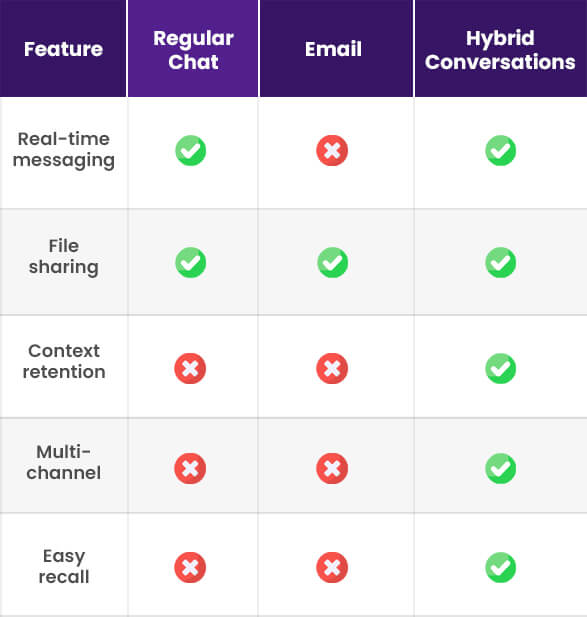
Why They Beat Regular Chats and Emails

Let’s play a quick comparison game.

Features Table

Basically, they are like the best of both worlds.

The Human Side of Context

Here’s something we don’t talk about enough: context doesn’t just help with productivity; it helps with relationships. When you understand the full background of a conversation, you can respond more thoughtfully.

For example, a customer support agent isn’t just replying to a single complaint—they’re looking at the history of emails, chats, and notes tied to that customer. That means fewer generic “we’re sorry for the inconvenience” responses, and more personalized, effective communication.

How to Introduce Them in Your Team

If you’re ready to test the waters, here are a few easy steps:

  1. Start with one project – Pick a team or project where communication tends to get messy.
  2. Create conversations – Group all related chats, emails, files, and meetings under one conversation.
  3. Encourage adoption – Show your team how much time they save when everything’s in one place.
  4. Let AI do the work – Tools like Clariti’s AI help keep things linked, so the system gets smarter as you use it.

Future of Communication: Context is King

The workplace is only getting busier, with more tools, more information, and more collaboration. Leaders who want to stay ahead need to recognize that context is king. They aren’t just another “nice new feature”—they’re a shift in how we think about communication itself.

Conclusion: From Chaos to Clarity

Let’s face it: emails alone won’t cut it anymore, and chat apps often leave us with scattered thoughts. What we need is a way to tie it all together—like stitching a quilt from loose patches. That’s exactly what they do.

By mastering context, leaders can help their teams reduce confusion, save time, and build stronger collaboration. Tools like Clariti bring this to life by blending chats, emails, calls, files, and calendars into one context-rich experience.

So next time you find yourself scrolling endlessly for “that one email” or pinging teammates to “resend the file,” maybe it’s time to think about whether your team needs them. Because at the end of the day, communication isn’t about more apps—it’s about more meaning.

Frequently Asked Questions

In business communication, “context” refers to the background information, history, and circumstances surrounding a discussion. It helps people understand why a message is being shared and how it connects to ongoing work. Context can include previous decisions, related documents, or key stakeholders involved.

Adding context to hybrid meetings can start with sharing agendas and objectives in advance. Leaders can attach relevant documents, emails, or summaries so everyone has background knowledge before joining. During the meeting, referencing past discussions helps connect new updates with earlier decisions. Recording minutes and linking them to the same meeting thread also builds context.

Leaders can improve hybrid conversations by consistently linking current discussions to previous ones. They should summarize earlier points before introducing new topics so everyone has the same understanding. Providing quick recaps for people who missed earlier meetings keeps them engaged. Leaders can also centralize communication in one platform so the history is always accessible.

Leaders should be clear, consistent, and inclusive when managing hybrid communication. They can schedule regular check-ins to ensure remote participants are equally involved. Using shared digital spaces for all communication helps prevent information silos. Providing context at the start of discussions helps participants contribute meaningfully. 

Leave a Comment