


Blog
Cross-Functional Collaboration: Ultimate 2026 Guide to Team Success
- By Vinod Kumar VR
- No Comments


- Published on
- 10 min read
Work today is more connected than ever. Teams no longer work in one place or one role. People from marketing, sales, product, and support must work together every day. This is called cross-functional collaboration.
Studies show how important this is. According to McKinsey, companies that promote strong collaboration are 5 times more likely to be high-performing.
A report by Deloitte found that 83% of digitally mature companies use cross-functional teams to improve speed and innovation.
Another study by Harvard Business Review shows that teams that work across departments solve problems faster and with better results.
These numbers show one clear thing. Teams that work together win more often.
But it is not always easy. Different teams have different goals. They use different tools. They may not always understand each other. This can lead to confusion and delays.
That is why learning how to build strong cross-functional teams is very important in 2026.
In this guide, we will explain what cross-functional collaboration is, why it matters, its benefits, challenges, and how to do it well. Everything is written in a simple way so you can use it right away.
What Is Cross-Functional Collaboration
Definition and Core Principles
Cross-functional collaboration means people from different teams work together on one goal. For example, a product launch may include marketing, sales, and engineering teams.
The main ideas are simple:
- Shared goals.
- Clear communication.
- Team accountability.
- Respect for different skills.
When teams follow these ideas, work becomes smoother and faster.
Cross-Functional vs. Functional Teams: Key Differences
Functional teams work within a single department, such as marketing or sales, where people focus on similar tasks and goals. In contrast, cross-functional teams bring together people from different departments to work on a shared goal or solve a common problem. While functional teams focus more on deep expertise in one area, cross-functional teams focus on faster results, better collaboration, and broader outcomes by combining different skills.
|
Aspect
|
Functional Teams
|
Cross-Functional Teams
|
|---|---|---|
|
Team Structure
|
One department only
|
Multiple departments
|
|
Example
|
Only marketing team
|
Marketing + sales + product
|
|
Focus
|
Deep expertise
|
Speed and outcomes
|
|
Goal
|
Department goals
|
Shared team goals
|
|
Collaboration
|
Limited to one team
|
High across teams
|
Why Cross-Functional Collaboration is Important
Cross-functional collaboration is important because it brings people from different teams together. Each team has its own skills and ideas. When they work as one group, they can solve problems faster and better. This also helps teams understand each other and work with less confusion.
Driving Innovation in Fast-Paced Industries
New ideas grow when people share different views. A developer, a marketer, and a designer may all look at the same problem in different ways. When they work together, they can find better and more creative solutions.
In fast-moving industries, this is very helpful. Teams need to act quickly and think in new ways. Cross-functional work makes it easier to test ideas and improve them fast.
- Different skills bring new ideas.
- Problems are solved in creative ways.
- Faster thinking and quick action.
- Better solutions through teamwork.
Enhancing Agility for Remote and Hybrid Teams
Today, many teams work from home or in different places. This can make communication harder. Cross-functional collaboration helps teams stay connected and work as one unit.
It makes sure everyone knows what is happening. This helps teams move faster and adjust to changes easily, even when they are not in the same place.
- Helps teams stay connected.
- Supports remote and hybrid work.
- Makes it easier to adapt to change.
- Keeps everyone on the same page.
Aligning Business Goals Across Departments
When teams work together, they understand the main goal of the company. This helps them make better decisions. It also reduces confusion and avoids mistakes.
Each team knows how their work fits into the bigger picture. This leads to better results and smoother workflows.
- Clear understanding of goals.
- Less confusion between teams.
- Better decision-making.
- Improved overall results.
Boosting Employee Engagement and Retention
People feel more involved when they work with different teams. They feel like they are part of something bigger. This makes work more interesting and meaningful.
When employees enjoy their work, they are more likely to stay with the company. This helps reduce turnover and build a strong team.
- Work feels more meaningful.
- Better teamwork and bonding.
- Higher job satisfaction.
- Employees stay longer in the company.
Benefits of Cross-Functional Collaboration
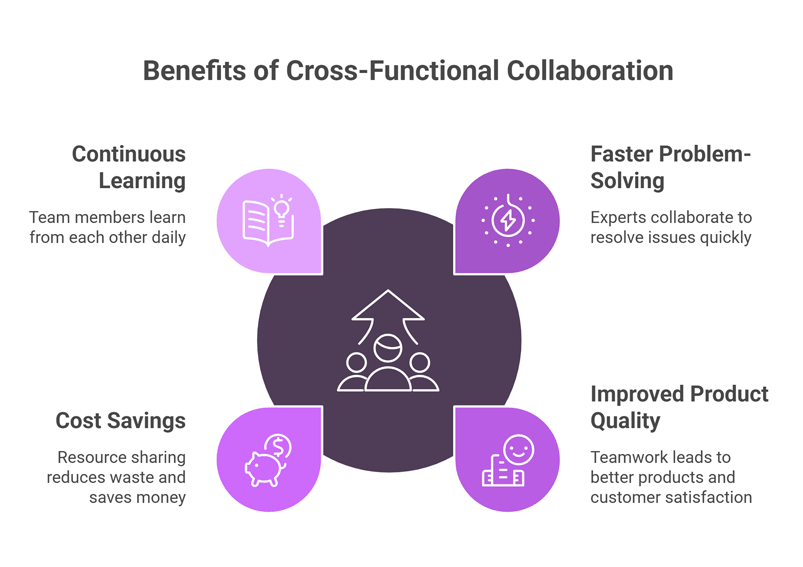
Cross-functional collaboration helps teams work better together. When people from different teams join hands, they bring new ideas and skills. This makes work easier and more effective. It also helps teams avoid delays and do better work.
Faster Problem-Solving and Decision-Making
Problems are solved faster when all the right people work together. Each person understands a different part of the problem. This helps the team find answers quickly.
Teams do not need to wait for updates from other groups. They can talk, share ideas, and decide in one place. This saves time and keeps work moving forward.
- Experts solve problems together.
- Faster decisions with clear input.
- Less waiting between teams.
- Quick action on issues.
Improved Product Quality and Customer Satisfaction
When teams work together, they create better products. Each team adds its own ideas and checks the work. This helps find mistakes early and improve quality.
Customers also get better results. Products and services match what they need. This makes them happy and builds trust.
- Better teamwork improves quality.
- Fewer errors in the final product.
- Products meet customer needs.
- Higher customer satisfaction.
Cost Savings Through Resource Optimization
Teams can share tools, time, and skills when they work together. This helps reduce waste. Work is planned better, and teams avoid doing the same task twice.
Better use of resources also means fewer delays. This helps save money and improves overall efficiency.
- Shared resources reduce waste.
- No duplicate work.
- Better use of time and tools.
- Lower costs for the team.
Fostering a Culture of Continuous Learning
People learn more when they work with different teams. They see new ideas and ways of working. This helps them grow and improve their skills.
Learning from each other also builds strong team bonds. It creates a positive work culture where people support and help each other.
- Learn from different team members.
- Share knowledge every day.
- Build stronger team relationships.
- Encourage growth and learning.
Measurable ROI: Case Studies and Metrics
Companies often track:
- Faster project delivery.
- Higher customer satisfaction.
- Better team performance.
These show clear value from collaboration.
Challenges of Poor Cross-Functional Collaboration
When teams do not work well together, many problems can arise. Poor collaboration can slow down work, create confusion, and affect results. It can also make work stressful for employees. Understanding these challenges can help teams fix them early.
Communication Breakdowns and Misalignment
When teams do not share updates clearly, work can get delayed. Important information may not reach the right people at the right time. This can lead to mistakes and confusion.
Misalignment happens when teams are not on the same page. They may work toward different goals without knowing it. This makes it harder to complete tasks smoothly.
- Unclear messages cause confusion.
- Missing updates lead to delays.
- Teams may work in different directions.
- More mistakes and rework.
Siloed Mindsets and Resistance to Change
Some teams prefer to work alone. They may not want to share ideas or change their way of working. This creates silos, where teams do not connect with each other.
When teams resist change, progress becomes slow. It becomes harder to try new ideas or improve processes. This can hold back growth.
- Teams work in isolation.
- Less sharing of ideas.
- Slow adoption of new methods.
- Limits innovation and growth.
Resource Conflicts and Scalability Issues
When teams do not coordinate well, they may compete for the same resources. This includes time, tools, or budget. This can create tension and delays.
As the team grows, these issues become bigger. Without clear planning, it becomes hard to manage resources properly.
- Competition for time and tools.
- Delays due to poor planning.
- Hard to scale as teams grow.
- Increased workload conflicts.
Measuring and Addressing Team Burnout
Poor collaboration can lead to too many meetings and unclear roles. Employees may not know what is expected from them. This can cause stress and frustration.
Over time, this can lead to burnout. When people feel tired and stressed, their work quality may drop. It is important to manage workload and keep communication clear.
- Too many meetings waste time.
- Unclear roles create stress.
- Employees feel overwhelmed.
- Lower productivity and morale.
Best Practices for Cross-Functional Teams
Selecting the Right Team Members and Roles
Choose people with the right skills. Define roles clearly.
Tools and Tech Stack for Seamless Collaboration
Use tools like:
- Slack for chat.
- Asana for tasks.
- Miro for brainstorming.
Some teams also use tools like Clariti to keep emails, chats, and files in one place with context.
Establishing Clear Goals, KPIs, and Accountability
- Set simple goals. Track progress. Make everyone responsible.
Regular Feedback Loops and Conflict Resolution
- Talk often. Solve issues early. Keep communication open.
Training Programs for Cross-Functional Skills
- Train teams on communication, teamwork, and problem-solving.
Next Steps in Building Cross-Functional Teams
Building a cross-functional team takes planning and care. Teams need clear goals, the right people, and simple ways to work together. When done well, it helps teams move faster and work better. These steps can help you start and grow strong cross-functional teams.
Assessing Your Organization's Readiness
Before you start, check if your team is ready. Look at how teams work today. See if they share ideas and communicate well.
You should also check if the right tools are in place. Teams need simple tools to talk, share files, and track work. Culture is also important. Teams should be open to working together.
- Check current teamwork and communication.
- Review tools used by teams.
- Look at team skills and strengths.
- Make sure people are open to change.
Step-by-Step Team Formation Guide
Start by setting a clear goal. Everyone should know what they need to achieve. Then choose people from different teams who can help reach that goal.
Give each person a clear role. This helps avoid confusion. Start with a small group, so it is easy to manage. Keep things simple in the beginning.
- Define a clear goal.
- Select team members from different areas.
- Assign clear roles and tasks.
- Start with a small team.
- Keep communication simple and clear.
Pilot Projects: Starting Small for Big Wins
It is best to begin with a small project. This helps teams learn how to work together. It also reduces risk if something goes wrong.
A small project gives quick results. Teams can see what works and what does not. They can then improve before taking on bigger work.
- Start with a simple project.
- Test how teams work together.
- Learn from mistakes.
- Improve processes step by step.
Scaling Success: From One Team to Enterprise-Wide
Once the first team works well, you can expand the approach. Bring in more teams and apply the same process. This helps spread success across the company.
Make sure to keep communication clear as you grow. Each team should understand the goals and how they fit into the bigger plan.
- Expand to more teams slowly.
- Use lessons from the first team.
- Keep goals clear for all teams.
- Maintain simple and strong communication.
Resources and Tools for 2026 Implementation
Using the right tools makes a big difference. Teams need tools that help them talk, share files, and track work in one place. This reduces confusion and saves time.
Modern tools also support remote work. They help teams stay connected even when they are not in the same place.
- Use tools for chat, tasks, and file sharing.
- Choose simple and easy-to-use platforms.
- Reduce the need for many apps.
- Keep all work and communication in one place.
How Clariti Helps in Cross-Functional Collaboration
Cross-functional work can get messy very fast. Teams use many tools. Messages get lost. People keep switching between apps. This slows down work.
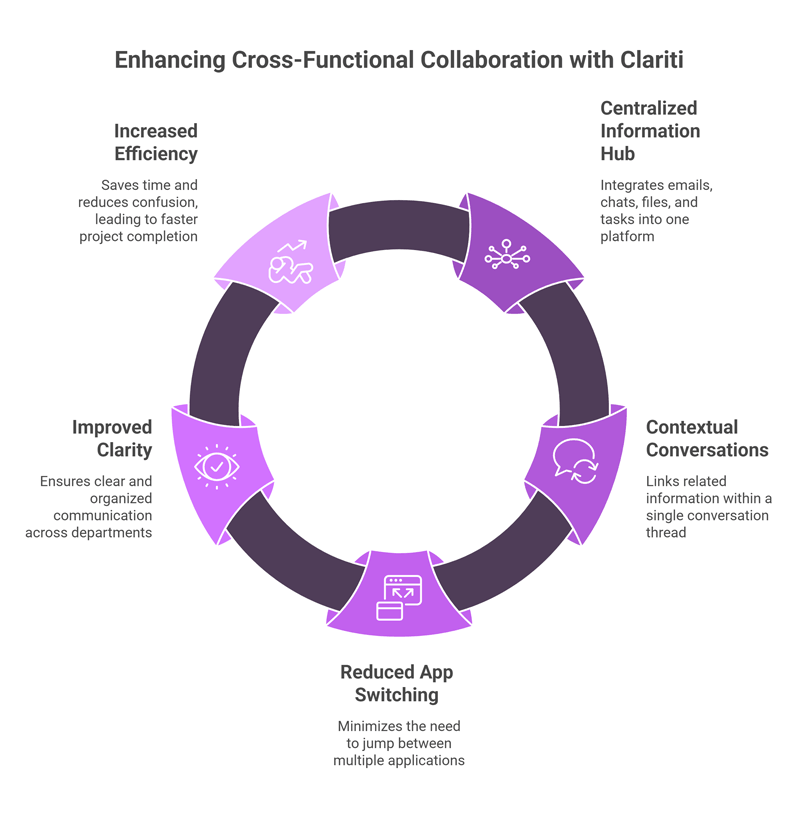
Clariti solves this problem in a simple way. It brings emails, chats, files, and tasks into one place. But more importantly, it connects them with context.
In most tools, a chat is separate from an email. A file is stored somewhere else. So teams spend time searching for information.
In Clariti, everything stays linked in one conversation. This is called a contextual conversation. It means you can see the full story in one place.
For example, if a marketing team shares a campaign plan, the email, chat, files, and meeting notes all stay together. Anyone from any team can understand the topic quickly.
This is very helpful for cross-functional teams because:
- Everyone sees the same information.
- No need to ask “what is this about?”
- Less confusion and fewer mistakes.
Clariti also reduces app switching. Teams do not need to jump between tools for chat, email, and files. This saves time and keeps focus on work.
Another key benefit is clarity. When teams from different departments work together, they may think differently. Clariti helps by keeping communication clear and organized.
How Clariti Guides Teams to Success
Success in cross-functional teams depends on clear communication, shared goals, and easy access to information. Clariti supports all three.
- First, it improves understanding. Since all messages are connected, new team members can quickly catch up. They do not need long explanations.
- Second, it supports better decisions. Teams can see full discussions before making choices. This leads to smarter and faster decisions.
- Third, it saves time. People spend less time searching for emails or files. They can focus more on actual work.
Clariti also supports both real-time and async work. This is useful for remote and hybrid teams. People can reply when they are ready, without losing context.
It also helps build accountability. Since everything is linked in one place, it is easy to see who said what and when. This reduces confusion.
Over time, this way of working builds trust. Teams feel more confident because they have full visibility.
In simple terms, Clariti helps teams:
- Stay organized.
- Communicate clearly.
- Work faster.
- Make better decisions.
When cross-functional teams have clarity and context, they perform better. That is how they move from confusion to success.
Conclusion
Cross-functional collaboration is no longer optional. It is a must for modern teams. As work becomes more complex, no single team can do everything alone.
When teams work together, they move faster. They solve problems better. They build better products. Most importantly, they create a stronger work culture.
But success does not happen by chance. It needs clear goals, the right tools, and strong communication. Teams must learn to trust each other and share ideas openly.
There will be challenges. Some teams may resist change. Others may struggle with communication. But with the right approach, these problems can be solved.
Start small. Build one strong cross-functional team. Learn from it. Then grow step by step.
In 2026, the best companies are not the ones with the smartest individuals. They are the ones with the best teamwork.
If you focus on collaboration today, your team will be ready for the future
Frequently Asked Questions
What is cross-functional collaboration?
Cross-functional collaboration is when people from different teams work together on one goal. For example, marketing, sales, and product teams join efforts to complete a project.
What is the difference between cross-functional and functional teams?
Functional teams work within one department, while cross-functional teams include members from different departments working together. Cross-functional teams focus more on shared outcomes.
Why is cross-functional collaboration important in 2026?
Work is now more digital and fast-moving. Teams are often remote or hybrid. Cross-functional collaboration helps teams stay aligned, move faster, and build better solutions together.
What are the key benefits of cross-functional teams?
- Faster decision-making.
- Better problem-solving.
- Improved product quality.
- Stronger team alignment.
What challenges arise from poor cross-functional collaboration?
Poor collaboration leads to confusion, delays, and missed goals. Teams may work in silos, misunderstand each other, or duplicate work.
How do you overcome communication barriers in cross-functional teams?
Keep communication simple and clear. Use shared tools, set clear goals, and encourage open discussions so everyone stays on the same page.
What are the best practices for building cross-functional teams?
- Define clear roles and goals.
- Choose the right mix of skills.
- Encourage regular feedback.
- Use simple and shared tools.
What tools are essential for cross-functional collaboration?
Tools that combine communication and work are best. Teams often use chat apps, project tools, and platforms like Clariti that keep emails, chats, and files connected in one place.
How do you measure the success of cross-functional teams?
Look at results like faster project completion, better team satisfaction, and improved outcomes. Feedback from team members also helps measure success.




Start for FREE with Personal CRM
We too hate spam! Your email is secure with us.

Spot secured. You're in.
You’re officially on the list for early access to Clariti.


No more switching tools.

No more lost context.

Just Clarity.
You’ll be among the first to experience it when we launch. We’ll let you know the moment it’s ready.

Keep an eye out for emails from @clariti.app.
(and check your spam folder just in case—whitelisting us helps ensure you don’t miss a thing).