


As businesses prepare for the future, workplace management software is emerging as a key tool for optimizing office operations and enhancing productivity. By 2026, the demand for workplace management tools is expected to rise exponentially, driven by the increasing adoption of hybrid work models. A report by Fortune Business Insights projects the global facility management software market to grow from $43.69 billion in 2022 to $76.90 billion by 2029, reflecting a significant shift towards smarter office solutions.
Workplace management software provides businesses with a centralized platform to streamline administrative tasks, optimize space usage, and improve employee experiences. These tools are equipped with features like real-time monitoring, task automation, and data analytics to help companies efficiently manage office space, track employee performance, and enhance collaboration.
As remote and hybrid work models become the norm, these solutions are crucial for navigating the complexities of modern workplaces, ensuring smooth communication, and maintaining operational efficiency. With AI-powered insights and integrated communication tools, businesses can reduce overhead costs and enhance overall productivity, making workplace management software indispensable for office environments in 2026.
What is workplace management software?
Workplace management software is designed to streamline and optimize the daily operations of an office or work environment. It encompasses a broad range of functionalities including scheduling, resource allocation, communication, and task management. These tools enable businesses to better manage their physical and digital workspaces, improve team collaboration, and track employee performance.
By centralizing operations into one system, workplace management software enhances efficiency, reduces operational bottlenecks, and helps remote and hybrid teams stay connected. With features like time tracking, reporting, and project management, such software is essential for improving workflow and productivity in the modern workplace.
5 key Workplace Management Software
1. Clariti
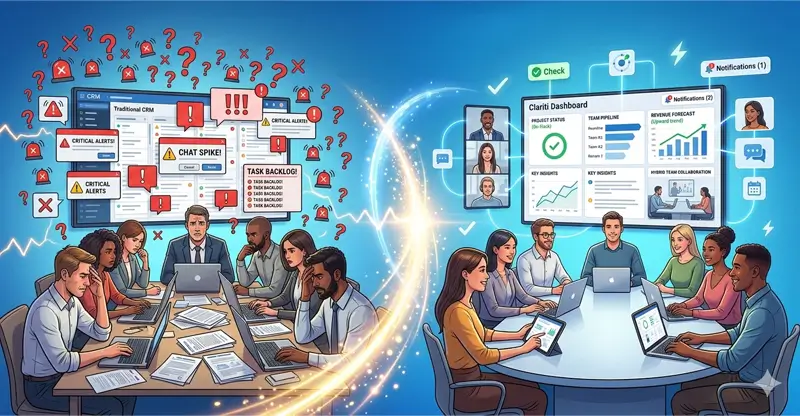
Clariti is a connected communication tool designed to streamline communication by combining emails, chats, shared documents, and calendar events into context-based hybrid Conversations. This enables teams to reduce app-switching and centralize communication within a single platform, improving productivity and alleviating digital stress.
Pros
- Combines email and chat into hybrid Conversations.
- Reduces app overload with centralized communication.
- Enables connected, context-based collaboration.
Cons
- No mobile app.
Why did we choose this tool
- Simplifies communication and eliminates silos.
- Contextual conversations keep the team on track.
- Offers cost-effective collaboration features.
Pricing
- Free basic plan.
- Premium at $9/user/month.

2. Personio
Personio is an HR management system software tailored for small and mid-sized businesses. It streamlines critical HR processes such as employee onboarding, payroll management, and performance tracking. With an intuitive interface and robust functionality, Personio helps organizations reduce administrative overhead and focus on strategic growth initiatives.
Pros
- Comprehensive HR management features.
- User-friendly design, ideal for small and mid-sized businesses.
- Supports compliance with HR documentation and reporting.
Cons
- Limited customization options for larger organizations.
- Some advanced features require premium plans.
Why did we choose this tool
- Simplifies complex HR processes for growing businesses.
- Combines payroll, performance tracking, and onboarding in one platform.
- Ideal for teams transitioning to hybrid work models.
Pricing
- Starts at €99/month for up to 25 employees.
3. Teamcamp
Teamcamp is an all-in-one project management and collaboration platform designed to streamline workflows, enhance productivity, and bring teams, clients, and projects together in one place. With features like customizable workflows, task management, time tracking, file sharing, and real-time collaboration, it empowers teams across industries to manage projects with clarity and efficiency.
Pros
- Intuitive interface with easy onboarding for teams.
- Customizable workflows that adapt to different project needs.
- Built-in time tracking and visual progress tracking with Reporting.
- Suitable for agencies, startups, and enterprises.
Cons
- Third-party integrations are still growing.
- Requires a bit of setup to unlock its full potential.
Why did we choose this tool?
- Combines project management, collaboration, and client management in one platform with the lowest pricing.
- Flexible enough for marketing, development, design, HR, and finance teams, and a perfect fit for Agencies.
- Scales smoothly with growing businesses and distributed teams with an easy interface.
Pricing
- Free Trial for Unlimited Users with a 250 task Limit.
- $8 / Per user with Unlimited Projects.
- $129 / Unlimited Users/ projects/ tasks.
4. Monday.com
Monday.com is a work operating system (Work OS) that allows teams to build custom workflows, manage tasks, and collaborate in real-time. It is highly customizable, allowing teams to create boards and automations that fit their specific needs.
Pros
- Extremely customizable for various workflows.
- Strong visualization tools (Gantt charts, timelines).
- Great team collaboration features.
Cons
- Can be overwhelming due to customization options.
- Higher pricing for advanced features.
- Limited reporting in lower-tier plans.
Why did we choose this tool
- Versatile tool for managing diverse projects.
- Offers custom workflows and automation.
- Supports scalability for growing teams.
Pricing
- Starts at $8/user/month.
- Standard at $10/user/month.
- Pro at $16/user/month.
5. Basecamp
Basecamp is a project management and team collaboration tool that focuses on simplifying workflows with to-do lists, calendars, file sharing, and message boards. It’s designed for teams that prefer a straightforward, easy-to-use tool to manage projects and communication.
Pros
- User-friendly interface for all team members.
- Simplifies communication and project tracking.
- Fixed pricing makes it cost-effective for larger teams.
Cons
- Limited in customization compared to other tools.
- Lacks advanced reporting and analytics features.
- Not ideal for complex projects requiring detailed tracking.
Why did we choose this tool
- Simple, straightforward project management.
- Cost-effective for teams of any size.
- Great for small businesses and startups.
Pricing
- $99/month for unlimited users and projects.
10 Key features of workplace management software
- Task and Project Management: Helps assign, track, and manage tasks and projects, ensuring teams stay on schedule.
- Resource Allocation: Enables businesses to manage and allocate physical and digital resources effectively, ensuring optimal usage.
- Time and Attendance Tracking: Monitors employee working hours, attendance, and leaves for better workforce management.
- Collaboration Tools: Includes chat, video conferencing, and file-sharing features to enhance team communication.
- Space Management: Organizes and optimizes the use of physical office spaces, meeting rooms, and workstations.
- Reporting and Analytics: Provides insights into productivity, resource usage, and project progress through detailed reports.
- Document Management: Centralizes file storage and document sharing, making it easy to find and access important files.
- Automation and Reminders: Automates routine tasks and sends notifications for deadlines, events, or upcoming tasks.
- Security and Permissions: Controls access to sensitive information with user roles and permissions for enhanced security.
- Integration Capabilities: Works seamlessly with other software such as CRM, email, or finance tools for streamlined workflows.
8 Key benefits of workplace management software
- Enhanced Productivity: By automating routine tasks, tracking deadlines, and centralizing communication, workplace management software helps teams stay focused and productive.
- Improved Collaboration: Features such as real-time chat, file sharing, and task management foster seamless collaboration, especially in hybrid and remote work environments.
- Resource Optimization: Workplace management tools allow efficient allocation and tracking of resources like office space, equipment, and digital assets, reducing wastage and maximizing usage.
- Better Decision Making: The software provides data analytics and reports that offer insights into performance metrics, helping managers make informed decisions quickly.
- Time and Cost Savings: By streamlining processes such as time tracking, project management, and communication, these tools save valuable time and reduce operational costs.
- Flexibility in Work Arrangements: With remote and hybrid work becoming the norm, the software enables employees to collaborate efficiently from any location, maintaining productivity.
- Centralized Information: Documents, reports, and communication are stored in one place, making it easier for teams to access the information they need without switching between multiple platforms.
- Improved Compliance and Security: Role-based access controls, secure document storage, and compliance tracking ensure that sensitive data is protected and the business adheres to relevant regulations.
10 ways how businesses need workplace management software helps remote work.
1. Seamless Communication for teams
Workplace management software like Clariti revolutionizes how teams manage communication by integrating emails, chats, documents, and tasks into a single contextual hybrid Conversation. This “connected communication” approach ensures that employees never miss critical information, reducing the overload caused by scattered communication channels.
In 2026, hybrid workplaces will increasingly depend on such platforms to keep employees connected, organized, and focused. With Clariti, every conversation has context, making it easier to track the “who, what, when, and why” behind each task. Studies show that teams using integrated communication platforms can boost productivity by up to 30%, as employees spend less time switching between apps.
2. Data-Driven Decision Making through Real-Time Analytics
As AI and machine learning continue to evolve, workplace management software in 2026 will harness real-time data analytics to provide organizations with actionable insights. These platforms will track employee productivity, resource allocation, and office space usage, enabling managers to make informed decisions.
For example, a company could identify underutilized meeting spaces and reorganize them to optimize costs. According to Gartner, by 2025, 70% of organizations will use AI-driven analytics in workplace management tools to improve efficiency and reduce costs. Real-tan also help identify bottlenecks in workflows, allowing managers to implement quick solutions to avoid delays.
3. Enhanced Flexibility with Hybrid Work Management
As remote work becomes permanent in many industries, the ability to manage hybrid teams will be a game-changer. Tools like Monday.com and Trello are already providing flexible solutions, but in 2026, workplace management software will fully integrate features like remote team scheduling, task management, and real-time collaboration.
These platforms will allow for seamless work distribution across physical offices and remote locations, ensuring everyone is on the same page. A study by McKinsey predicts that 40% of employees will continue working remotely in some capacity by 2025, making these tools essential for maintaining productivity and team cohesion.
4. Automation for Greater Efficiency
Workplace management software is expected to advance further in automating repetitive and time-consuming tasks. Platforms such as Asana and Wrike are already implementing task automation features, and by 2026, these will become more sophisticated. Automated workflows will allow teams to assign tasks, manage approvals, and track deadlines with minimal manual input, reducing human error and saving time.
For instance, using AI to automatically reassign tasks based on employee availability will prevent bottlenecks. According to Forrester Research, automation can reduce the average employee’s workload by up to 20%, freeing up time for more strategic tasks.
5. Comprehensive wellbeing Management
With growing awareness of employee wellbeing, workplace management software will also focus on mental health and work-life balance by 2026. Platforms like Smartsheet and Notion are beginning to integrate wellness tracking, such as monitoring work hours, breaks, and stress levels. By using AI, these tools will recommend personalized wellness plans or reminders for employees to take breaks and avoid burnout.
A report by Deloitte found that companies that focus on employee wellbeing see a 56% increase in retention and productivity. These platforms will provide insights into team health, allowing them to intervene proactively when needed.
6. Enhanced Resource and Asset Management with Real-Time Updates
Workplace management software in 2026 will play a crucial role in efficiently managing both physical and digital resources. These tools will provide real-time tracking of office assets, equipment, and even digital resources like licenses or software subscriptions.
Some tools, for instance, could implement features that integrate with asset management systems, ensuring everything from laptops to software is allocated effectively and utilized optimally. Gartner predicts that 75% of businesses will implement IoT-enabled resource management tools by 2025 to reduce resource wastage and optimize asset usage, translating to significant cost savings. As a result, investing in advanced Resource Management Software is becoming a strategic priority for organizations aiming to improve operational efficiency and maximize asset performance.
7. Streamlined Project Management with Cross-Platform Integration
Project management tools like Asana, ClickUp, and Basecamp already offer integration with numerous other platforms, but by 2026, workplace management software will enhance cross-platform compatibility. This will allow seamless data sharing between various systems, such as integrating HR tools with task management platforms for better employee oversight.
For example, an employee’s progress on a project in Asana could automatically update in the HR system, providing an up-to-date picture of task completion rates and employee performance. According to Forbes, companies that implement cross-platform integrations see a 10-15% increase in productivity due to smoother collaboration and reduced redundancy.
8. Data Security and Compliance in Remote Work Environments
With the rise of remote and hybrid work, workplace management software will prioritize security features to safeguard sensitive business information. Most of the tools will implement end-to-end encryption, role-based access controls, and compliance with international regulations like GDPR and CCPA. As more data is stored in the cloud, robust security protocols will be essential for businesses handling large volumes of confidential information.
A PwC report forecasts that 90% of companies will adopt enhanced security features in their digital workplace tools by 2025 to prevent data breaches and ensure compliance with evolving data privacy laws.
9. Improved Onboarding and Training for Remote Employees
Workplace management tools are becoming vital in the onboarding and continuous training of remote employees. Most of the tools will enable businesses to offer remote onboarding experiences that are both engaging and effective.
For instance, training modules, company policies, and project guidelines can be integrated within the software itself, ensuring new hires have all the resources they need at their fingertips. The remote workforce will continue to expand, and McKinsey estimates that 25-30% of the workforce will remain remote post-2025, making seamless digital onboarding tools a necessity.
10. Personalized Workflows and Employee Productivity Enhancements
Finally, the future of workplace management software will involve more customization and personalization for individual users. Many tools will allow employees to create personalized dashboards, automate routine tasks, and customize workflows based on their preferences, increasing engagement and productivity.
AI will be integrated to understand employee work patterns and suggest improvements, such as automating recurring tasks or reordering priorities for better efficiency. A Deloitte study reveals that companies with personalized work environments see a 20% increase in employee engagement and retention, highlighting the importance of individualized workplace solutions.
Conclusion
As we look ahead to 2026, workplace management software is poised to transform how organizations operate in an increasingly digital world. By enhancing communication, optimizing resource management, and ensuring compliance, these tools will address the complexities of hybrid and remote work environments. Features like connected conversations, personalized workflows, and robust security measures will not only streamline operations but also boost employee engagement and productivity.
Moreover, the integration of advanced analytics and real-time updates will empower businesses to make data-driven decisions, ensuring they remain competitive. As noted by Gartner and McKinsey, organizations embracing these smart solutions will be better equipped to navigate the evolving landscape of work. Ultimately, adopting innovative workplace management tools will be crucial for businesses aiming to thrive in the future of work, making them indispensable for any organization looking to enhance efficiency and employee satisfaction.
Frequently Asked Questions
What is a work management software?
Work management software helps teams organize, prioritize, and track tasks and projects, ensuring smoother workflows and enhanced collaboration.
What are the 7 major functions of office management?
The major functions include planning, organizing, staffing, directing, controlling, coordinating, and budgeting.


Start for FREE with Personal CRM
We too hate spam! Your email is secure with us.

Spot secured. You're in.
You’re officially on the list for early access to Clariti.


No more switching tools.

No more lost context.

Just Clarity.
You’ll be among the first to experience it when we launch. We’ll let you know the moment it’s ready.

Keep an eye out for emails from @clariti.app.
(and check your spam folder just in case—whitelisting us helps ensure you don’t miss a thing).